

Corea del Nord (I)North Korea (I)
Arquitectura / Burocràcia / Corea / Corea del Nord / Cultura / Freak / Política / Transport / Turisme
agosto 21, 2011 9Com ja va dir l’Anna al seu anterior post no he anat a visitar-la a la Índia. La destinació sorpresa d’aquest any era Corea del Nord (o Democratic People’s Republic of Korea, DPRK) i com que podeu llegir això vol dir que tot ha anat bé :)

Com que resulta una destinació particular (ja veieu que el Google Maps no en sap massa cosa, tot i que és un problema polític més que no pas tècnic) i diversos dels amics han mostrat interès per saber sobre l’experiència faré un relat detallat, però per no fer un post massa llarg dividiré l’explicació en 2 o 3 posts que publicaré els pròxims dies.
A Corea del Nord NO s’hi pot anar en plan motxilero sino que només s’hi pot anar amb un viatge organtizat. Segons diverses fonts sembla que al voltant d’uns 1,200 estrangers (2/3 xinesos) visiten DPRK cada any. Hi ha diverses agencies de viatge amb les que poder contractar el tour però jo vaig optar per apuntar-me al viatge organitzat per la Korean Friendship Associaton (KFA), presidida pel mediàtic Alejandro Cao de Benos de Les y Pérez, amb el convenciment de poder tenir una visió més complerta del país.

La KFA és una missió especial del govern de la DPRK a l’estranger amb moltes atribucions i responsabilitats (una mena de ministeri d’asumptes exteriors però amb més flexibilitat d’acció) i la gent que s’apunta al viatge és considerada amiga de la DPRK (no un turista regular com en altres agències). Us recamno una passejada per la web i el fòrum.
Tot comença a Beijing
El punt de sortida i finalització del viatge era Beijing. Vaig anar-hi amb un parell de dies d’antel·lació. Al ser una ciutat on ja he fet el turista em vaig limitar a caminar una mica i anar a passejar pels parcs que són una delícia a l’estiu. L’Emma (una amiga de l’Anna que viu ara a Beijing) es va cuidar de que no em faltés de res i em va ensenyar el Beijing més «local». Mil gràcies!!!
[salbumphotos=100,64,max,n,n,picasa_order]
La trobada amb la KFA era a les 8 del matí del dia 10 d’Agost a un hotel de Beijing. Va ser el primer cop que em vaig trobar amb els companys de viatge i la sensació era similar a les gales inaugurals del Gran Hermano. Hi havia una barreja important de nacionalitats i motivacions per anar a la DPRK. L’Alejandro ens va explicar una mica el planing, ens va avisar que la DPRK està de fet encara en guerra tot i haver firmat un armistici, i va introduir-nos algunes de les restriccions que tindriem a la DPRK .A arrel d’alguna pregunta vam fins i tot disfrutar d’alguna dissertació sobre com la Xina actual (capitalista amb una estructura comunista) és el pitjor de totes les solucions. La cosa prometia doncs.

Nota: els únics noms reals són els de l’Alejandro i el Bjornar que són personalitats públiques i conegudes. A la resta de companys els hi he posat un nom fitici per respectar la seva intimitat.
- Alejandro i el Bjornar són el president i el “deputy” de la KFA, per tant els organitzadors i responsables del viatge.
- D’origen rus la Nadia (vivint a Irlanda del Nord. Aquest era el seu 3r viatge i és membre de la KFA) i al Vladimir (vivint a França, membre de la KFA i molt motivat amb tot el tema militar)
- Un dels companys més particulars era el Mark, director de cine que vol ser capaç de donar una visió positiva de la DPRK. El Mark és nord-irlandès però ara viu ben al nord de Noruega (i ha viatjat per mig món)
- Al Andrzej de Polònia el motiva explorar possibles relacions comercials amb algunes de les empreses nord coreanes.
- Fernando és un brasiler (n’hi ha molt pocs que visitin DPRK) que treballa a la borsa però a la vegada té molt interès en totes les idees socialistes/comunistes i lleugerament anti-americà. Després del viatge encara no he entès com ho casa tot plegat però en qualsevol cas una persona intel·ligent i viatjada.
- I com no… dues noies basques, l’Arantza i la Idoia, també amb molta experiència de donar voltes pel món (una d’elles ara viu a cavall entre Bilbao i el nord del Pakistan).
- Viatge en l’espai: Corea és a Àsia (tot i que l’arquitectura enganya força i en molts moments ho pots dubtar). Crec que viure un any i mig a Àsia m’ha permès entendre millor alguns dels valors i actituds de la gent de la DPRK, com el fet de que el grup és més important que la persona (comú en moltes cultures asiàtiques).
- Viatge en el temps: Tot sovint semblava estar als anys 80, tant amb els seus aspectes limitadors (tecnologia o disseny) com en aspectes més positius (poc estrés, nens jugant al carrer fins tard i saber disfrutar del que es té encara que no sigui molt)
- Viatge mental: Aquest potser ha estat el més complicat. D’una banda intentar entendre com s’organitza un pais comunista i aïllat del món i com pensa la gent que hi viu (o l’estima). D’altra banda veure com ets control·lat en tot moment i tot el que fas s’evalua des d’una perspectiva negativa. En 10 dies no es pot aconseguir una valoració complerta però si que es pot rascar una mica la superfície.
- És un pais comunista d’uns 24 milions d’habitants amb el que l’estat propociona casa, educació, atenció mèdica, roba, cupons per menjar i et troba feina. No hi ha paro.
- Treballen de dilluns a dijous unes 8-9 hores. El divendres es dedica a treball voluntari (entec que és treballar en alguna altre cosa), la meitat del dissabte a l’estudi i la resta és temps lliure. Tenen 2 setmanes de vacances a l’any. La veritat és que no es veu gent estressada o corrent a la DPRK.
- L’organització i els objectius de producció els marca l’estat en funció de les necessitats de la DPRK. En teoría això permet limitar la sobreproducció de coses que no es necessiten. Aquesta planificació central sempre ha estat un punt de debat en els sistemes comunistes.
- Ens van comentar que el salari oscila entre 3000-8000 wons (20€ – 60€ amb un canvi 150 Won = 1€) i és la gent amb la feina més dura (granjers, miners, etc.) els qui reben el salari més elevat. Els treballadors d’oficina reben un salari menor. Amb el salari poden comprar menjar, roba, llibres, etc. addicionals. Fonts com la Wikipedia parlen d’un salari de 2€ al mes però també he llegit 1000€ l’any… dificil de saber
- Hi ha bancs però només pels estalvis. No es pot demanar un crèdit i endeutar-se massa (només per un casament o similar i per pocs diners). Amb la crisi del deute actual això no no poder-se endeutar potser no és una mala idea.
- No hi ha publicitat (però la veritat és que no es troba a faltar). L´única publicitat que vaig veure va ser a la botiga d’import-export nacional on es presentaven productes locals a empreses estrangeres.
- Hi ha botigues però totes pertanyen a l’estat. Moltes de les botigues les porten gent gran que hi viu aprop i això els permet fer vida amb el barri. Ho explicaré més endevant.
- Es pot anar amb bicicleta i les noies poden portar pantalons (algún articulista va dir que no??)
- Els texans (jeans) no estan permesos, per ser americans
- El fet de tenir 2 guíes al grup no és per evitar que els estrangers subornin a un guía sino per permetre relleus quan calgui (ja que el guía no està amb la seva família sinó amb el grup de turistes, és a dir, dorm al hotel i no a casa seva). Suposo que també permet capturar més informació sobre les activitats dels participants.
- Ens comenten que la societat té una moral molt estricta en el comportament públic però poca inferència en els aspectes privats com l’orientació sexual.
- Hi ha poca polícia ja que “tothom és un polícia” (i es denunciaràn comportaments o actituds incorrectes). Suposo que és incòmode ser denunciat per un conciutadà…
- És un país ultra-segur i quasi no hi ha càmeres de vigilancia, però sempre hi ha algú que et vigila :)
- A la ciutat, fora d’algunes rotondes, hi ha poc transit i això combinat amb grans avingudes dóna molta sensació de desert. Fora de la ciutat el trànsit és ínfim i les carreteres molt sobredimensionades. La versió oficial respon que les carreteres estan pensades per a la guerra (moure columnes de tancs i poder-hi aterrar/enlairar avions)
- La gent nordcoreana riu, fa esport, balla als parcs (després de beure una mica), etc…. en general gent normal i corrent… almenys des d’un punt de vista extern.
- Alejandro and Bjornar are the president and the deputy of KFA. Organizers of the trip and defenders of the North Korean cause around the world.
- Nadia is Russian (although she now lives at Northen Ireland. She’s KFA member and this was her 3rd trip to DPRK). Vladimir is also Russian but living in France (member of KFA and highly motivated to learn all about DPRK and army related stuff)
- One of the most particular characters was Mark, movie director who wants to make a positive film about DPRK (if they allow him…). Mark grew up in Belfast and now lives in the northen remote areas of Norway (and he’s travelled to half of the world while making films)
- Andrzej from Poland is looking to understand if it is possible to have some business relations with DPRK for his firm. Bureaucracy in DPRK is very very very compliated.
- Fernando is a Brazilian (it seems very few Brazilians enter DPRK) that works at the stock market but at the same time has interest on socialist/communist ideals with an small anti-american twist. Even after the trip I still don’t fully understand how he mixes everything but nevertheless he’s very intelligent, educated and experienced..
- Last but not least… two girls from Basque Country (currently part of Spain), Arantza and Idoia. Both with extensive travel experience (just to mention that one of the currently lives between Bilbao and the north of Pakistan).
- Space travel: Korea is Asia (although looking from the window one could have doubts about it). I think that the fact of living in Asia for more than a year and a half allowed me to better understand some of the DPRK people habits and values, such as that the group is more important than the individual (common among all Asian cultures).
- Time travel: Quite often it was like being back to the 80’s, both in aspects like technology and design but also in aspects like no stress or having kids playing on the street till late (TV is not very interesting in DPRK).
- Mental trip: This one was probably the most complicated bit. On one side try to understand how an isolated and communist country is organized and how the people that live (and/or love it) think about their future. On the other side being under surveillance 24/7 and knowing that all your actions will be evaluated as a potential thread first. In only 10 days it is only possible to sracth the surface.
- DPRK is a communist country with 24 milion inhabitants. The state provides free housing, education, medical care, clothes, coupons for food and finds a job for you. There is no unemployment.
- They work from Monday to Thursday for 8-9 a day. Friday is devoted to voluntary work (I understand this is working on some community projects or alike), half of Saturday is used as study day and the rest of Saturday and Sunday is just free time. They have 2 weeks of holiday every year. The thruth is that people are not stressed in Pyongyang.
- The organization and production objectives for the factories are managed by the state according to DPRK needs. In theory that allows to limite the overproduction of uncessary goods. This «central planning» is always a complicated point in any communist country.
- It was mentioned to us that salary range from 3000-8000 wons (20€ – 60€ using exchange rate 150 Won = 1€). People with harder jobs (miners, farmers, etc.) get higher salaries and office workers lower ones. With their salary they can buy additional food, clothes, etc. Sources like Wikipedia mention a monthly salary of 2€ but I also read in other parts 1000€ a year… so difficult to know. Low salaries are a selling point for the companies that want to have some manufacturing done in DPRK.
- There are banks, but only saving banks. You can’t get a large credit (only a small one to get married). Looking at the debt crisis that seems to be a good thing.
- There are no adverts (but you will hardly miss them). The only adverts I could spot were at the import-export shop where national products where on display to be exported.
- There are shops but belong to the state (not a private business). Sometimes shops are run by old people who live nearby so they can have contact with their neighbours. I will talk more about the shops later on.
- It is possible to Pyongyang citizens to use the bycicle and ladies can wear trousers (who wrote they could not???)
- Jeans are not allowed (too american)
- Having two guides in the group is not to avoid that tourists brive a guide but to allow guides to rest and take turns (guide is with the group and not with the family for the whole trip duration). I assume two guides see and hear more too, so more information can be collected and reported about the tourists behaviour.
- Alejandro mentioned in various ocassions that North Korean society has a very strict moral on how to behave in public but at the same time they won’t sniff into private matters (such as sexual orientation).
- There is almost no police as «everybody is a policeman/policewoman». I assume it has to be uncomfortable that a neighbour reports about your missbehaviour.
- The country is ultra safe and there are almost no security cameras (but there is always someone watching you anyway :))
- At the city, except in few roundabounds, there is little traffic and if you combine that with large avenues it looks like a very deserted place. Outside the city the traffic is minimal and the roads and very over-dimensioned. The official answer is that roads have been designed for war (to move tanks and be able to take-off/land planes)
- North Korean people smile, is active with sports (including skating!), dance at the parcs (after drinking some beer), etc… so regular people… at least from an external point of view.
La primera sopresa va ser el visat. Normalment els turistes reben una «tourist card» separat del passaport, com aquest:

Suposo que al anar amb la KFA i ser considerats més que turistes normals, a nosaltres ens van posar un visat real al passaport (veurem si això porta problemes en futurs viatges a segons quins països com USA)

Viatge cap a Pyongyang i primeres impressions
L’endemà avió (Tupolev molt nou de Koryo Airlines) i cap a Pyongyang falta gent.
[salbumphotos=101,64,max,n,n,picasa_order]
A l’aeroport et segellen i guarden el mòbil fins que surtis del país. A la DPRK hi ha mòbils (la tecnologia la proporciona Orascom d’Egipte) però ens van dir que funcionen amb una encriptació diferent (???). En qualsevol cas els mòbils no són omnipresents i sembla que només gent amb certes responsabilitats pot tenir-hi accés (els nostres guies tenien mòbils moderns i els feien servir bastant)
Al ser un tour organitzat tot estava planitificat al detall (quan tingui un escàner a mà afegiré el .pdf aquí). Ja ens van alertar que la burocràcia és tan complicada a la DPRK que fins i tot algú com l’Alejandro (de 3r rang en la jerarquia total del país) no pot fer canvis d’última hora (una extensió de 2 dies d’una visa pot requerir 10 dies de tràmits). Aquesta super burocràcia no crec que afavoreixi el dinamisme del pais en general i pot fer que molta gent deixi d’intentar fer coses només per la burocràcia amb la s’han d’enfrontar. D’altra banda hi ha gent que es sent comfortable amb processos ben definits encara que siguin llargs i en molts passos.
Des del primer moment està clar que estarem controlats de ben aprop i no podrem ni anar a pixar sols (cosa que en algun moment va passar literalment). Un cop t’expliquen la política del país es pot entendre aquesta obsessió pel control però d’entrada resulta estrany. Com qualsevol altre grup que visita la DPRK, en tot moment teniem 2 guies amb nosaltres. Alguns companys van patir un marcatge més fort que el vaig tenir jo però si que sembla que tot el que passa/fas/dius queda registrat d’alguna manera.
El primer trajecte en bus de l’aeroport al hotel permet veure una ciutat «espartana», poc asiàtica, força verda (parcs, marges del riu, etc.) i dominada en tot moment per l’Hotel Ryugyong (no acabat del tot encara)

La majoria de turistes van al Koryo Hotel (gent de negocis sobretot) o al Yangkagdo Hotel (molt aïllat, per tenir als turistes més controlats). A nosaltres ens van posar a un hotel més local i cèntric (Haegbansan Hotel). Res espectacular però correcte i funcional.
[salbumphotos=102,64,max,n,n,picasa_order]
A l’hotel no hi ha internet (de fet no n’hi ha enlloc) i fer trucades a l’estranger resulta molt car (per 3 minuts amb espanya i 2 minuts amb xina vaig pagar 9,4€)
No pots sortir de l’hotel (més enllà de l’esplanada de davant) sense guía, amb el que tens el moviments restringits (la justificació oficial és que és per la teva propia seguretat).
Breu introducció a la DPRK
El que tothom «sap» és que la DPRK és comunista, «del eje del mal» i molt aïllat de la resta del món. Per voluntat pròpia NO em vaig informar en accés sobre la DPRK abans d’anar-hi i així poder tenir la ment oberta per asaborir tota l’experiència sense expectatives concretes, prejudicis previs o detalls històrics segons la versió no nord-coreana. Ha resultat un viatge molt interessant en diversos aspectes i crec que la digestió de tot plegat serà lenta.
Per tal d’entendre la DPRK el primer dia vam visitar la casa del naixement de Kim Il Sung. La casa resulta més aviat poc creible però es un bon punt iniciàtic i tots els turistes i la gran majoria de nord-coreans la visiten.
[salbumphotos=103,64,max,n,n,picasa_order]
Kim Il Sung(1912 – 1994) es presenta com un infant superdotat i que en l’edat adulta es va convertir en el pare de la DPRK. En la versió nord-coreana és l’heroi que amb un exèrcit de guerrilles va expulsar als Japonesos de Corea l’any 1945 i més tard va liderar també la guerra de Corea fins a la firma de l’armistici. Altres fonts posen en dubte molts dels detalls de la versió oficial.
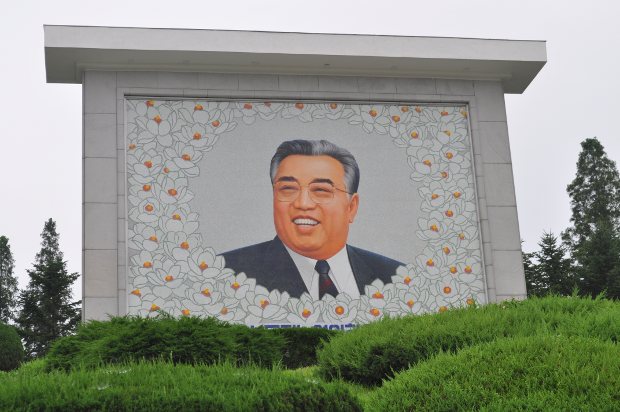
El 15 d’abril de 2012 farà 100 anys del naixement de Kim Il Sung. L’hotel Ryugyong s’inaugurarà (algunes plantes), barris de Pyongyang s’estant renovant o construint, diverses infrastructures civils s’enllestiran i hi haurà la “parade” militar més gran mai vista a la DPRK.
El mateix dia vam anar a un museu sobre tecnologia nord-coreana. El més interessant va ser entendre que la DPRK és un país ric en minerals (però certes materies les consideren estratègiques i no les exporten). Fan servir els minerals per a tot, fins i tot per fer fibres. Per contra són molt pobres en terra cultivable (17% del territori) i amb un clima poc amigable gran part de l’any pel que pateixen regularment problemes per alimentar la població i necessiten importar menjar.
També tenen problemes per generar energia (tot i que estan apunt d’inaugurar una pressa i diuen que també miren al tema de les energies renovables). La famosa història de la tecnología nuclear (ara mateix descontinuada) forma part de la generació d’energia (versió oficial).
Per l’aïllament i el bloqueig han optimitzat molts processos i per exemple els neumatics els reciclen tan com poden ja que sinó els han d’importar.
L’objectiu final és poder produir el 99% de les necessitats generals de la DPRK localment i reduïr les importacions al 1% (encara falta per arribar a aquest estadi)
La industria en els països comunistes és un orgull nacional i es pot veure tot sovint a la TV, propaganda, etc. En els països occidentals resulta més estrany veure informació sobre l’activitat industrial més bàsica del país.

Ja que hi ha molta des/informació (i tot sovint malintencionada), uns quants “quick facts” sobre DPRK basats en la informació oficial rebuda durant el viatge i observacions personals. Us ho podeu prendre com a contrapunt a les altres informacions i la veritat estarà més o menys al mig.
Hi ha dues idees principals que inspiren als nord-coreans i cal tenir-les presents al visitar el pais, el Juche i el Songun. La meva explicació serà breu i incompleta però podeu buscar altres fonts a internet si hi teniu interès.
El Juche
El Juche s’ha definit com l’aplicació del Marxisme-Leninisme al context nord-coreà i es tracta de tenir la capacitat d’actuar de manera independent sense interferències externes (el bloqueig internacional no els deixa molta més opció en qualsevol cas). A Espanya hi ha el Partido Juche en España.
A Pyongyang hi ha una gran torre de 170 metres (Torre Juche) d’alçada erigida en honor a Kim Il Sung pel seu 70è aniversari. Veureu també l’emblema del Partit dels Treballadors de Corea amb un treballador, un pagès i un intelectual.
[salbumphotos=104,64,max,n,n,picasa_order]
Songun
El Songun és més fàcil de resumir: L’exercit primer o l’exercit és el més important, entès no només en un sentit de defensa sinó també com a motor ejectuor dels conceptes de la revolució. A la DPRK parlen de l’era del Songun per referir-se a l’era actual.
A diferència dels exèrcits a altres llocs del món, l’exercit de la DPRK és un exèrcit que serveix com a mà d’obra per a molts construccions i obres en general. Per això sempre apareixen a la propaganda i a la TV al costat dels obrers. Sembla una bona idea fer servir l’estructura existent de l’exercit per a motius civils… altres països en podrien aprendre de la DPRK (almenys en aquest aspecte)
Disposen d’un milió de soldats (tot i “tothom es considera un soldat i està disposat a morir pel pais”) i uns quants (<10 sembla?) caps nuclears. Si són atacats poden enviar els mísils amb caps nuclears a Corea del Sud i Japó en pocs minuts). És tracta principalment d'una funció disuasòria per evitar inferències estrangeres en com DPRK tracta els seus asumptes interns i per ara sembla que ho han aconseguit. En diverses ocasions durant el viatge es va sentir que sense un exèrcit no pots defensar les teves idees/política (algú fins i tot es va oferir a ajudar a Catalunya si calia). Jo sóc poc amant del tema militar però si que és cert que occident només ataca a països militarment debilitats i sense amics al consell general de la ONU, com Líbia que poc després de que el Gadafi va “entregar les armes” (per ser acceptat com un amic a occident) s'ha vist interferida per les potències occidentals (a arrel de la primavera àrab, que fins a cert punt serveix d'excusa més que de raó última). Sense un exèrcit i armament potent probablement la DPRK no exisitiria a dia d'avui.
El pin a la solapa
Una de les imatges característiques de la DPRK és que tothom va amb un pin amb els colors de la bandera del país i una imatge de Kim Il Sun o Kim Jong Il (poc habitual).

És un regal de l’estat als ciutadans (quan fan 21 anys si no recordo malament) i després per mèrits i servei al país es poden aconseguir pins de major rang (tot i que les versions d’això no coincidien entre els diversos guies). Als estrangers que col·laboren amb la DPRK se’ls dona un pin de fons blanc. Segons ells mateixos, l’Alejandro i el Bjornar són les 2 úniques excepcions ja que ells tenen el pin amb fons vermell i de major rang possible degut a la seva responsabilitat a la KFA. Els coreans que ho veien no ho acababen d’entendre i els estaven molt encuriosit de saber com havien aconseguit el pin.
[salbumphotos=105,64,max,n,n,picasa_order]
Nota: A la Xina o l eBay es poden aconseguir reproduccions però clar, sense el valor simbòlic.
Nota: Les pròximes parts del viatge tindrán més fotos i menys texte! :) primer us havia d’explicar una mica aquest pais.As Anna already mentioned at her last post I was not going to visit her in India. The secret holiday destination this year was North Korea (or Democratic People’s Republic of Korea, DPRK) and as you are reading this it means that everything was alright :)
As it is an unusual destination (as you can see Google Maps has no clue about it, although this is more political than technical problem) and a number of my friends were curious about it I will prepare a series of 3 posts with detailed information and opinions.
At North Korea it is NOT to travel like a backpacker and the only way to enter the country is with an organized tour. According to various sources around 1200 foreigners visit DPRK every year (2/3 of them Chinese, so around 400 western tourists). There are various agencies in Beijing or Hong Kong that offer the tour but I decided to enroll with the Korean Friendship Associaton (KFA), lead by the well known Alejandro Cao de Benos de Les y Pérez. I hoped to have a deeper and more complete view of the country by joining KFA delegation instead of a regular tour operator.
KFA is a special delegation of the DPRK government to operate in foreign countries with numerous activities (some of these could not be perfomed by the Ministry of Foreign Affairs in an official way). People joining KFA delegation (some of them are KFA members) are not considered regular tourists but friends of DPRK. I highly recommend to tour around their website (forum, faqs, etc.) to learn more about them.
Everything starts at Beijing
The tour starts and ends at Beijing. I decided to go two days ahead to enjoy the city. As I’ve already done all the «must do» in Beijing I just strolled around and sit in the lovely parks (best thing to do in summer). Emma (Anna’s friend living at Beijing) took care of me at nights and showed me the local Beijing. Thank you very much!!
[salbumphotos=100,64,max,n,n,picasa_order]
The initial meeting with KFA was at 8 o’clock in the morning of August 10th at an hotel. It was the first time that I was going to meet with my travelmates and the feeling was like being in at the inauguration gala of Big Brother. There was a mix of nationalities and motivations to join the tour to the DPRK.
Alejandro briefed the group, reminded that DPRK is still at war with South Korea (although there is an armistice agreement) and introduced some of the limitations we were going to face at DPRK. At the Q&A we could enjoy his explanation on how current Chinese solution (capitalism using the existing comunist centric structures) is the most perverse combination in the entire world. It was an interesting start.
Note: I am only using real names for Alejandro and Bjornar who are publicly know as KFA members, for the rest I use fake names to preserve their privacy.
The first surprise was the visa. As I learned on some internet forums, DPRK tourists get a «tourist card» (detached from the passport) as this one:
I assume that because we joined KFA delegation and were considered more than regular tourists in our case we got a real DPRK visa on our passports (it will interesting to see if that creates any problem to enter some countries in the future)
Plane to Pyongyang and initial impressions
On the following day we took a plane (a new Tupolev from Koryo Airlines) and headed toward Pyongyang.
[salbumphotos=101,64,max,n,n,picasa_order]
At the airport they take and lock your mobile phone until you leave the country. At the DPRK people use mobile phones (the mobile phone network technology is provided by Orascom from Egypt) but they work in a slightly different way (different GSM encryption???). In any case while at DPRK the mobiles are not as visible as in any other country in the world and only people with certain responsabilities seems to have access to one (our guides had modern mobile phones and they used them everyday)
Being an organized tour everything was scheduled with detail (when I will have a scanner I will add a .pdf here). They mentioned couple of times that DPRK bureaucracy is very complicated and even someone like Alejandro (3rd in rank of management) can not request last minute changes (as an example a 2 days extension of a visa can take up to 10 days). I don’t think a system like that can help to generate dynamism and new ideas in the country, a lot of people won’t even try to do certain things because of the bureacracy involved on it. On the other hand I also met people who feel very comfortable when dealing with well defined processes (eventhough it can be very long)
Right from the very first moment it was clear that we were going to be closely monitored at all times and we could not even go to pee alone (that actually happened once). Once you are introduced to the politics of the country you understand a little bit better this obsession with control but it feels weird. As any other tour group visiting DPRK we were joined by 2 guides. Some travelmates were more closely monitored than myself but in any case it was obvious that anything that you do/say will end up recorded somewhere.
From the airport to the hotel it is possible to see an «spartan» city, not very asian, surprisingly green (parks, river sides, etc.) and dominated from all sides by the Ryugyong Hotel (still under construction, but almost finished from the exterior)
Most tourists end up at Koryo Hotel (business oriented) or at the Yangkagdo Hotel (very isolated, so tourists can not escape :)). Everybody except two people were placed at a more local and centric hotel: Haegbansan Hotel. Nothing special but correct and functional.
[salbumphotos=102,64,max,n,n,picasa_order]
At the hotel there is no internet (in fact there is no internet anywhere) and calling abroad is extremely expensive (I talked 3 minutes with Spain and 2 minutes with China with a cost of almost 10€)
You can not leave the hotel (further than the parking lot in front of it) without a guide. The official justification claims that it is for your own safety as you could be mistaken as a spy. (it seems DPRK people are educated to believe that most of foreigners are spies)
Brief introduction to DPRK
Everybody «knows» that DPRK belongs to the «axis of evil» and it is a very isolated country suffering international sanctions. I consciously decided NOT to inform myself too much so I could enjoy the experience without any specific expectation, believes or historical details that might not match north korean version. It has been indeed a very interesting trip in various front and I think it will take a while to fully digest the experience.
In order to understand DPRK the first visit was the house where Kim Il Sung was born. The house setup is not very impressive but understanding the DPRK version of Kim Il Sung live is a good starting point. All tourists visit the house and north korean seem to drop by too. (just a short ride from Pyongyang)
[salbumphotos=103,64,max,n,n,picasa_order]
Kim Il Sung(1912 – 1994) is presented as an extremely smart child that at the adult age becomes the father of modern DPRK. According to North Korean version he’s the one leading a guerrilla based attack to expel the Japanese (he manage to do it on 1945). Later on Kim Il Sung leads the army during the Korean was until the armistice is signed. He died from a sudden heart attack on 1994. Western sources seem to put in doubt a number of the heroic achievements of Kim Il Sung.
On April 15th 2012 it will be the 100th aniversary of Kim Il Sung and a lot of work is being put to be able to show the best of the country: opening of some of the Ryugyong floors, renovation of Pyongyang neighbourhoods, finalization of various civil infrastructures and the largest ever seen military parade at DPRK.
Later on we visited a museum about north korean technology. The most interesting was to learn that DPRK is very rich in minerals (although certain types are not exported because are considered strategic assets). They use minerals for everything, including making fibers!. DPRK is very poor on cultivable land (only 17% of their territory) and with a rather unfriendly climate, so they regularly have problems to feed their population and need to import food (some donated and some paid).
They also have problems to generate energy (but they are about to open a need hydro power station and they seem too look at renewable energies too). It is also famous the story about nuclear power in DPRK (now the program is halted, at least this is what we were told).
Due to isolation and sanctions they need to optimize a lot their processes and for example recycle most of the tyres, as otherwise they need to import.
The final target would be to be self-suistaned in 99% of the needs and reduce imports to only 1% (still far to reach objective)
In communist countries industry is national achievement and it is very visible on TV, propaganda and general media. In western countries we hardly ever see information about the activities of the «basic» industry in our countries (we are more service oriented).
As there is a lof of mis/information (sometimes on purpose sometimes just plain ignorance), few «quick facts» about DPRK based on the official information provided by Alejandro and the guides plus some of my own personal observations. You can mix that with western sources and the thruth we’ll probably be somewhere in between.
There arw two main ideas that inspire nord corean nation and you must take them into account while paying a visit to this country, the Juche and the Songun. Mi explanation will be brief and probably incomplete, but you can find other sources on internet if you are really into it.
The Juche
Juche idea has been defined as the application of Marxism-Leninism to the north korean context it is about being able to keep the capacity to act in an independent way without external interferences (in fact the international sanctions don’t leave room for any other option). In Spain I just discovered that there is a Partido Juche en España.
At Pyongyang there is a huge tower of 170 meters (Juche Tower) build on Kim Il Sung’s 70th aniversary. You will also see the emblem of the Workers Party of Korea with the worker, the peasant and the intellectual. We also visited some other monument with the same emblem.
[salbumphotos=104,64,max,n,n,picasa_order]
Songun
Songun is easier to explain and understand: «Army first», but not only in terms of national defense but also in terms of being the engine of the revolution around the country. In DPRK talk about the Songun era to talk about the current era.
Unlike other armys in the world, DPRK army is an army that is used as construction force for buildings, civil engineering, other arrangements, etc. The army people are always depicted alongside the workers on the official propaganda. It looks like a good idea to me to use the existing army structure, resources and workforce for something like buliding the country… other countries could learn from DPRK (at least in this aspect).
The army has around 1 milion people (although at DPRK «everybody is a soldier» and everybody is ready to die for the country) and North Korea has few (less than 10?) nuclear heads. If they are attacked they are ready to send missiles to Tokyo and Seoul in few minutes. It is mostly a dissuasory element to avoid being attacked and to be able to deal with their internal issues on their own particular ways (and it seems to be working so far).
More than once during the conversations we heard that without an army you can not defend you idees/policies (someone even offered to help at Catalunya if necessary). I am not a big fan of army stuff but I have to admit that western forces only attack regimes with weak army and/or no friends and the UN security council. Libya is the most recent example: after Gadafi reduced his military efforts (in order to be accepted at western circles), with the «excuse» of Arab Spring his regime has been attacked and it is about to be toppled. Similarly North Korea would not exist if they would not have such a powerful army.
The pin in the heart
One of the most characteristic images of DPRK is that everybody wears a pin with the image of Kim Il Sung or Kim Jong Il (not so often).
This is a present from North Korea to their citizens (when they turn 21 if my notes are correct). Additional pins can be obtained for special services to the country and there are various ranks but I did not fully understand the details. The foreigners that work in favour of DPRK are provided with a white background pin (the normal is red). According to themselves, Alejandro and Bjonar are the two only exceptions in the whole world as they have a red background pin with the highest possible rank due to their work and commitment at KFA. The north korean citizens that saw that could not believe it and had to ask them how they got their pin as it is really unsual.
[salbumphotos=105,64,max,n,n,picasa_order]
Note: In China or eBay you can get the pin too but it won’t have all the symbolic values attached.
Note: The next parts of this post will have more photos and less text! :) I had to firstly introduce a little bit the context of the country.
Molt interessant. Després de sentir i veure (TV) diverses informacions sobre el país, va bé llegir-ne una de ben directa i desapassionada, il.lustrada amb boniques fotos. Esperem la continuació.
Post super-interessant.
Fes-te un nou passaport per si mai has d’anar als USA, però de ben segur que ja estas fitxat a alguna arxiu de la CIA.
Keep writing man!
No es pot dir que no facis viatges originals tu! :o
Wow, cool article! Can’t wait to read part II in a minute :) You really gave a detailed view, it is interesting and more balanced than what I otherwise saw. By the way, if you want to see more pictures: http://www.flickr.com/photos/mytripsmypics/sets/72157604812751507/
It is a very comprehensive series.
Is it true that there is only a flight a day to Pyongyang?
Molt xulo l’article Albert!
mooooolt interessant!
Gràcies, gràcies. Mireu les altres parts també que hi ha més fotos
Gràcies a tu ja en sé una mica d’aquest estrany país per a nosaltres. Endavant en el vostre camí descobridor d’altres móns que nosaltres anem seguint des del nostre país petit.